AUM researcher explores how breast cancer communicates beyond the tumor
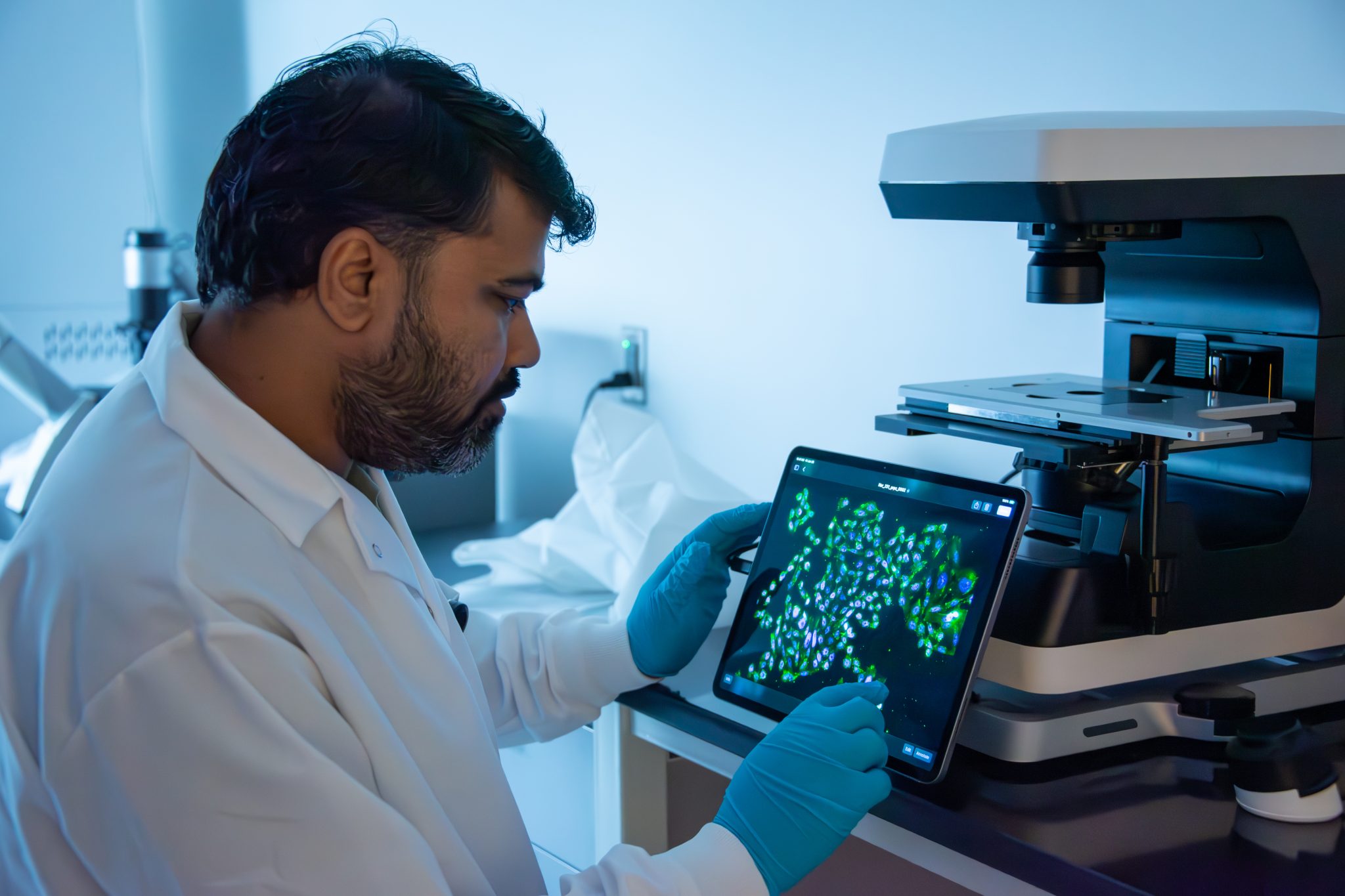
Researchers have long known that cancer cells can manipulate their surroundings, allowing tumors to grow and spread throughout the body. One question that continues to perplex scientists is how these tumors communicate with immune cells far from the original cancer site.

That question is at the center of a breast cancer research study led by Shivakant, assistant professor of biology and environmental sciences at Auburn University at Montgomery.
Since studying cancer metabolism as a doctoral student in India, Shivakant has been fascinated by the way cancer cells reprogram their metabolism to support their survival, growth and evasion of immune cells, the body’s natural defenses. Today, one of his research areas focuses on understanding how tumor-derived extracellular vesicles (EVs) — microscopic particles released by cancer cells into the bloodstream — carry metabolic cargo, or signals, that may influence immune cells and contribute to cancer progression throughout the body.
His research recently earned support from the Breast Cancer Research Foundation of Alabama (BCRFA), which selected Shivakant’s study as one of 25 projects to receive funding through the foundation’s $1.2 million investment in breast cancer research.
Using BCRFA’s $100,000 grant award, Shivakant and his research team are investigating triple-negative breast cancer (TNBC), one of the most aggressive forms of the disease. Specifically, they aim to identify metabolites — small molecules, such as amino acids, that are produced during cellular metabolism — and determine whether those metabolites, when packaged within extracellular vesicles, can alter immune cell behavior far from the tumor site itself.
The team’s findings could provide new insights into how triple-negative breast cancer progresses and potentially reveal new opportunities for early detection and future treatment strategies.
In a Q&A interview, Shivakant discusses triple-negative breast cancer, the goals of his research and why support for early-stage scientific investigation is critical to advancing cancer detection and treatment.
What is triple-negative breast cancer, and why is it important to study?
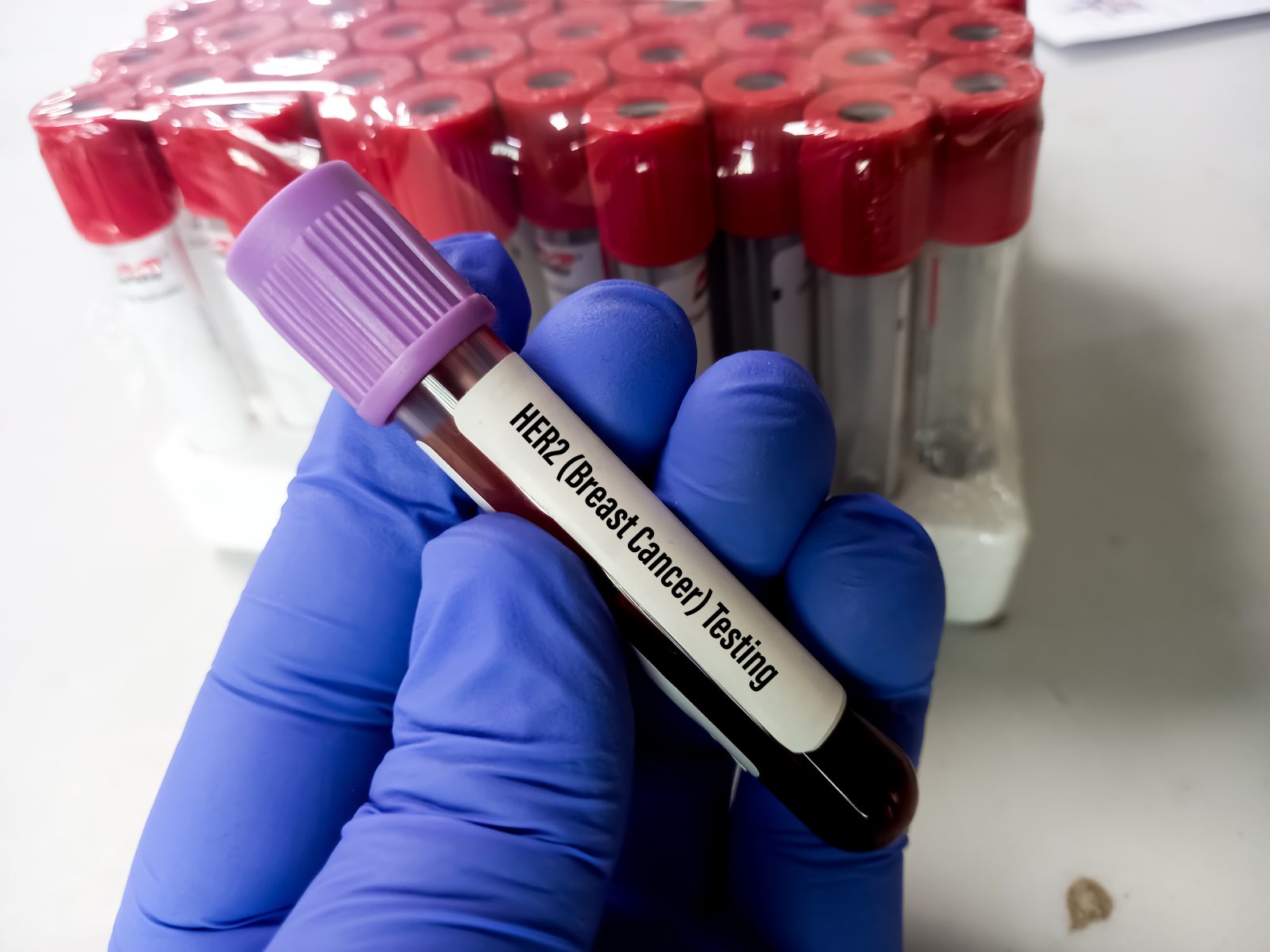 Triple-negative breast cancer (TNBC) is a subtype of breast cancer that does not express three receptors commonly found in other subtypes of the disease. These are estrogen receptor (ER), progesterone receptor (PR) and human epidermal growth factor receptor 2 (HER2) receptors. Because these receptors are absent, many targeted therapies that are effective for other breast cancer subtypes are not effective for patients with TNBC.
TNBC is also one of the most aggressive forms of breast cancer. It tends to grow and spread more rapidly and has a higher likelihood of early recurrence and metastasis to distant organs. These challenges make it especially important to better understand the biology of TNBC and identify new treatment approaches.
In simple terms, what is your research project investigating?
My research focuses on identifying the metabolites that triple-negative breast cancer cells package into tiny membrane-bound particles known as extracellular vesicles before releasing them into circulation in the bloodstream. We want to better understand how these metabolites may influence immune cells throughout the body and contribute to cancer progression.
Your research includes terms like “systemic immunosuppression” and “plasma extracellular vesicle amino acids.” What do these concepts mean, and why are they important?
Systemic immunosuppression refers to the weakening of the immune cells’ response beyond the primary tumor site. In other words, cancer may affect immune cells throughout the body, not just those located near the tumor.
Plasma extracellular vesicle amino acids are amino acids packaged within extracellular vesicles that are released by TNBC cells into the bloodstream (plasma). These vesicles act as messengers, transporting biological molecules between cells and tissues.
By studying these vesicles’ cargoes, such as amino acids, and how they affect immune cells, researchers can better understand how TNBC communicates with and suppresses immune cells located far from the primary tumor.
 How is funding from the Breast Cancer Research Foundation of Alabama (BCRFA) supporting your work?
Funding from the BCRFA has been instrumental in advancing my research. This support allows us to generate preliminary data that can strengthen future grant applications and help secure large sources of funding.
The grant is also helping my laboratory recruit and train master’s students in the rapidly advancing field of cancer metabolism. This funding not only supports my current research but also helps develop the next generation of cancer researchers.
Why is support for early-stage research so important?
Early-stage research funding provides the resources needed to test new ideas and explore promising research directions and generate preliminary data. The preliminary data that we generate is often essential for applying for and securing competitive federal grants.
For researcher at universities like AUM, this type of support can serve as a critical first step toward larger projects that have the potential to make significant scientific and clinical contributions.
How could this research ultimately benefit patients?
I hope my research will deepen our understanding of TNBC biology and how this aggressive form of breast cancer interacts with the immune system.
By identifying novel metabolic mechanisms linked to TNBC progression, our team’s findings could contribute to the development of more effective therapeutic treatment options. Ultimately, my goal is to improve outcomes and the quality of life and overall survival for patients diagnosed with TNBC.
What excites you most about the future of breast cancer research?
What excites me most is the growing understanding of the complex relationship between cancer cells, metabolism and the immune system.
Advances in technologies such as single-cell analysis, metabolomics and artificial intelligence are allowing researchers to now study cancer with unprecedented detail. I am hopeful that these scientific and technological breakthroughs will lead to more precise diagnosis, improve treatments and create better outcomes for patients with TNBC and other forms of breast cancer.